Overview
Built for fwd design co to automate the flow of information between payment systems, email marketing, and audience segmentation — enabling hands-off client onboarding and audience management.
Goal: a connected system that automatically adds new members and customers from Stripe into Kit, triggering the correct email sequences and tags.
Role: founder of fwd design co; digital business manager and systems architect overseeing design, build, and testing of the automation infrastructure.
The problem
fwd design co was growing its offers — memberships, waitlists, courses, and audits — but each audience lived in a different system. Every new Stripe purchase or form submission required manual updates in Kit, delaying onboarding emails and creating inconsistencies in subscriber tagging and segmentation.
The challenge was one cohesive automation framework connecting every entry point (purchase, sign-up, opt-in) to its correct workflow in real time.
Approach
I treated this as a systems design problem: connecting operations to user experience.
- Mapped all audience entry points (Stripe, forms, and opt-ins) and their intended workflows.
- Audited current email automations and tagging structure in Kit to identify inefficiencies.
- Defined success metrics around accuracy, response time, and user experience.
- Selected Zapier as the automation layer for syncing transactions, subscribers, and tags.
Solution
I designed and implemented an eight-part automation system integrating Stripe, Zapier, and Kit.
- Stripe → Zapier → Kit: new customers entered the correct automation sequence based on product or membership level.
- Segmented automations: eight visual workflows in Kit for memberships, courses, community, and newsletter funnels.
- Data hygiene & tagging: standardized tag naming to keep segmentation clear.
- Onboarding sequences: automated welcome, confirmation, and follow-up email flows.
- Scalable architecture: templates to replicate automations for future offers.
Alongside marketing automations, a Stripe → Notion workflow created a client portal page automatically when someone subscribed — with project details, links, and communication checkpoints.
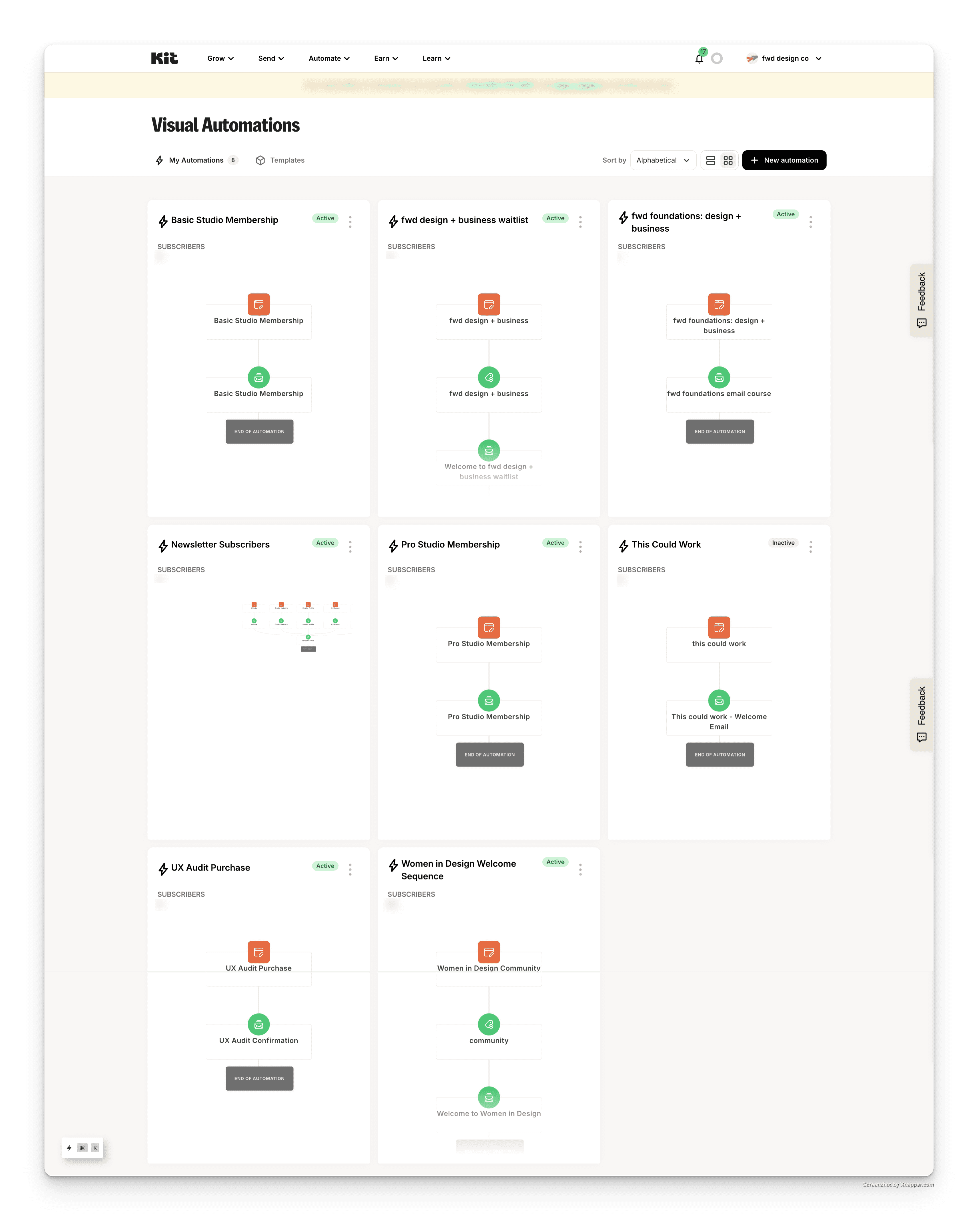
Eight-part automation ecosystem in Kit — memberships, waitlists, courses, and community
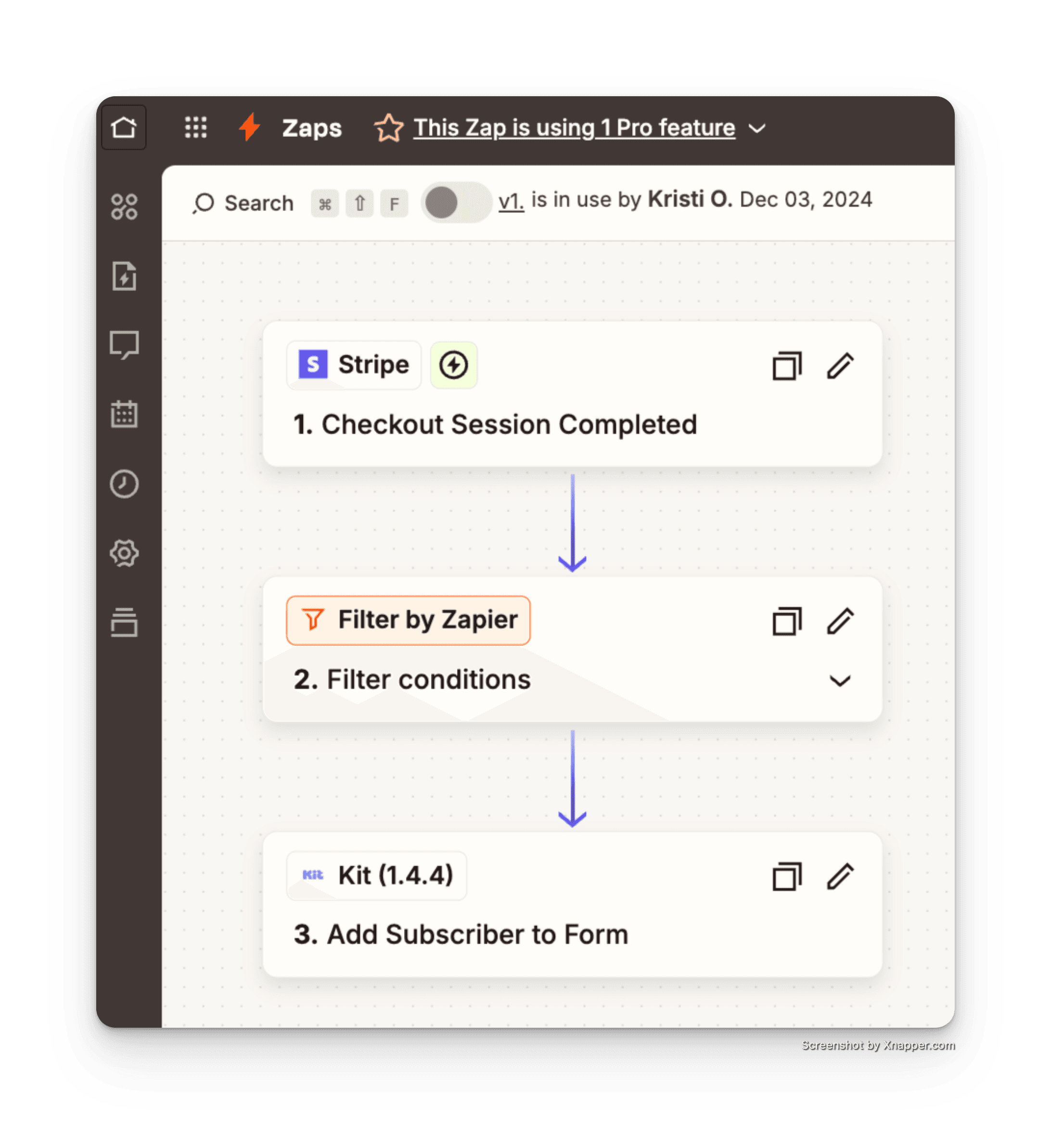
Stripe purchases enrolled into the correct Kit onboarding flow via Zapier
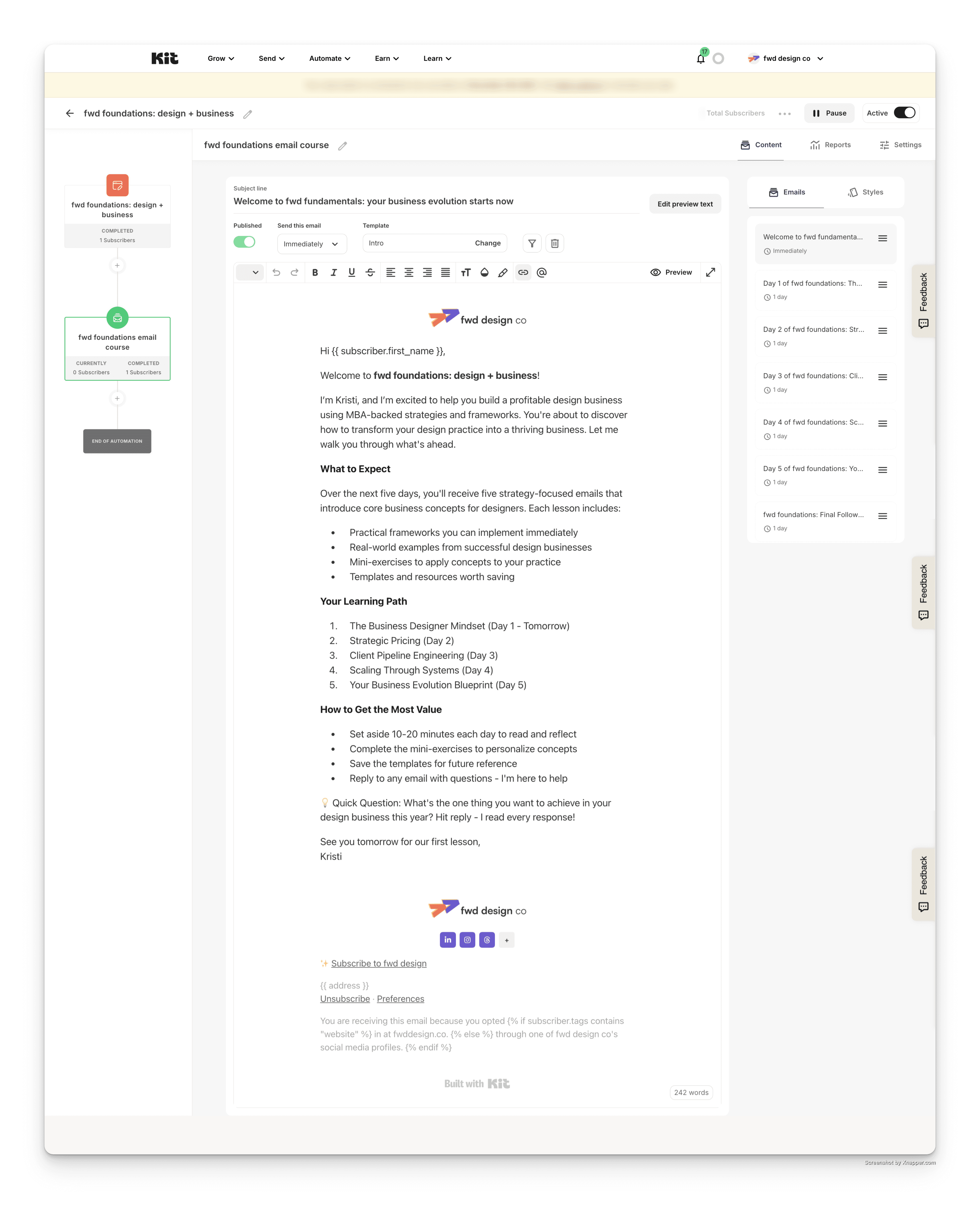
Automated branded welcome email in the course onboarding sequence
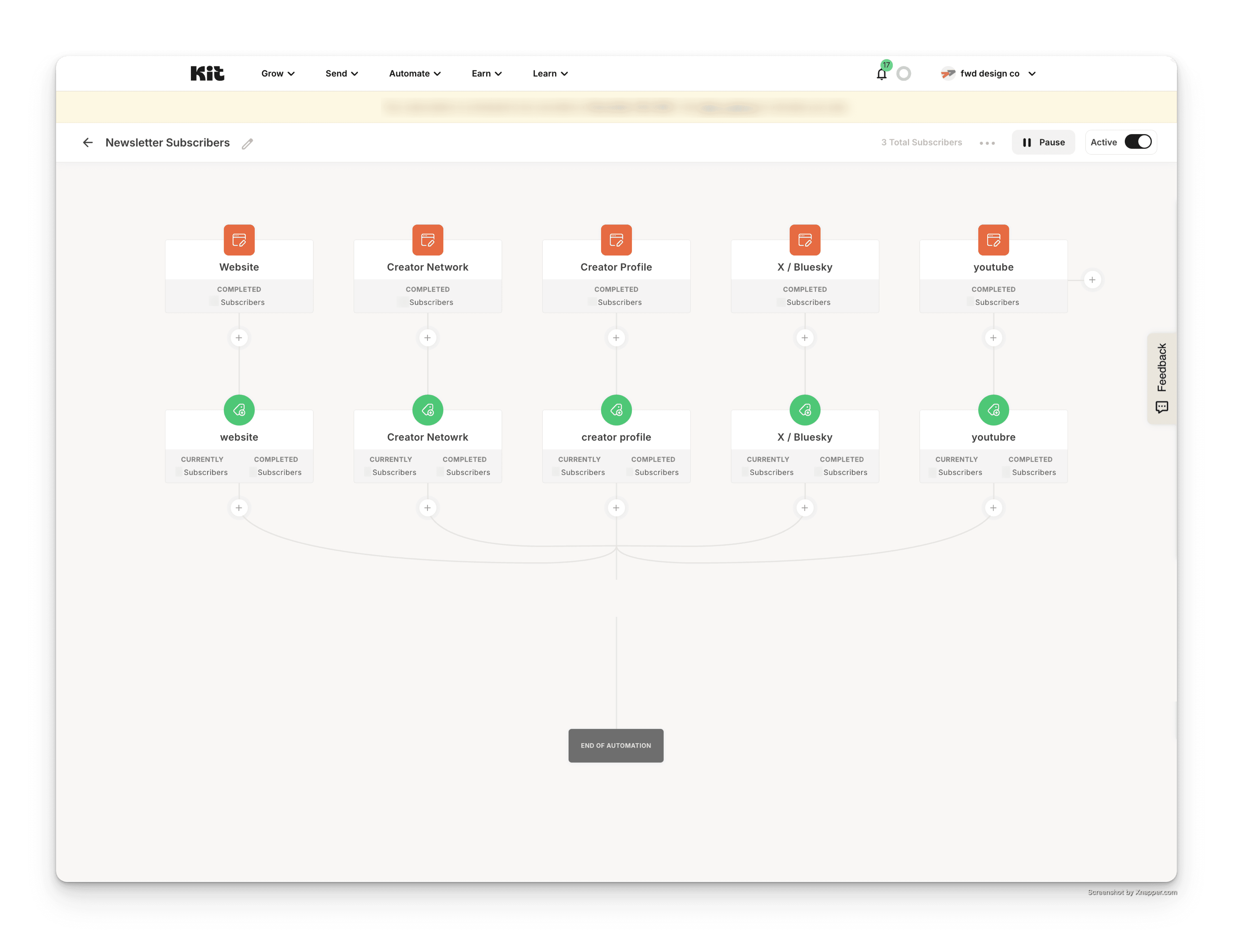
Subscriber segmentation across website, social, and content channels
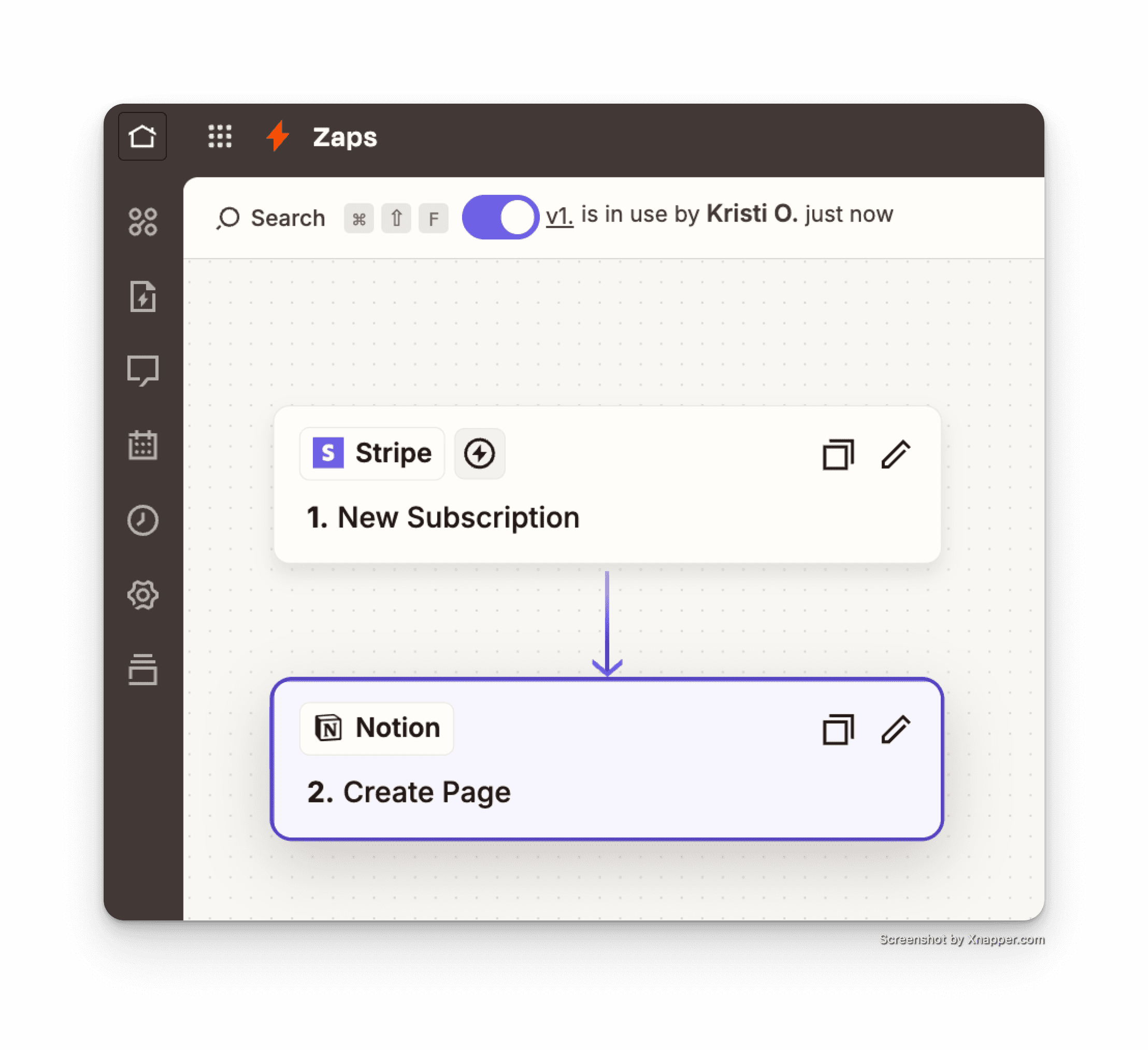
Stripe subscription automatically creates a Notion client portal page
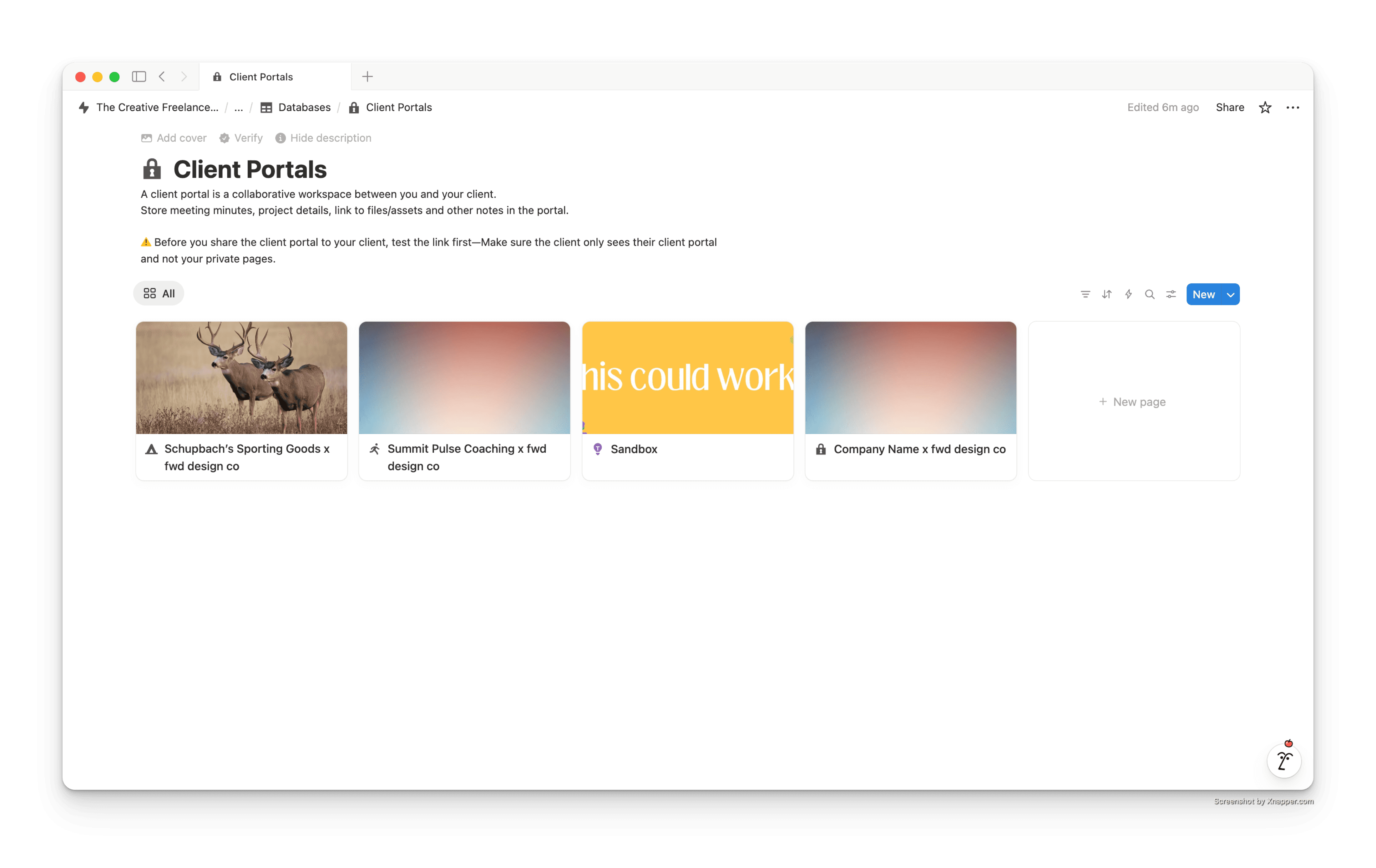
Notion database where each Stripe subscription creates a client workspace
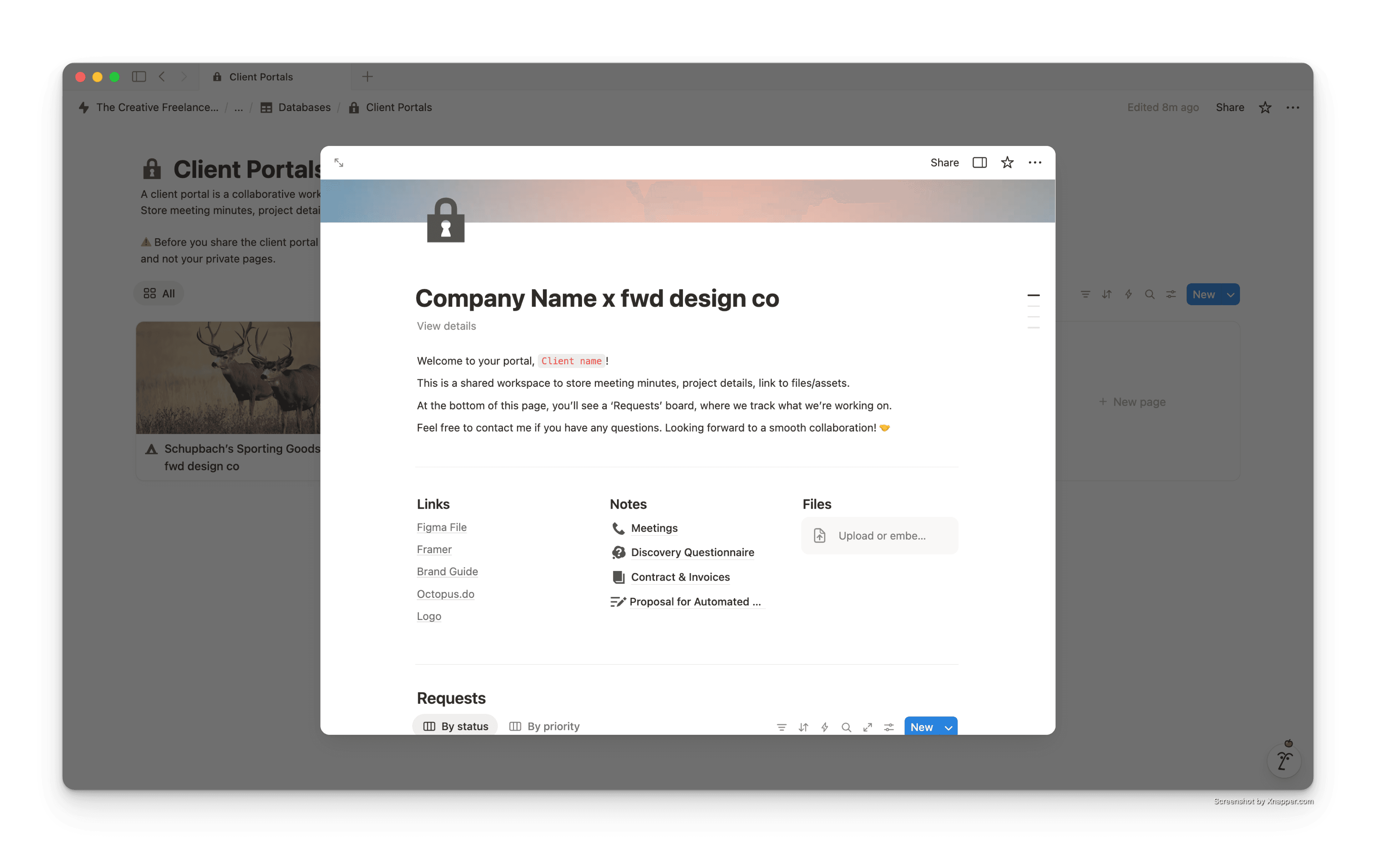
Client portal shared for meetings, files, and project updates
Impact
The automation system eliminated manual onboarding for memberships and product sales, increased data accuracy and segmentation consistency, improved client and community experience with instant branded communications, and created a replicable model for future fwd design co initiatives.
Reflection
Effective operations are both efficient and user-centric. Building this automation reinforced that systems serve people — clients, teams, and customers — and that designing for clarity and trust is as essential as technical precision.