Overview
Introduced Workday Talent features — career profiles, campaigns, and feedback tools — configured as a cohesive development ecosystem.
Goal: design and implement talent-development experiences that encouraged meaningful growth conversations.
Role: senior systems analyst connecting system architecture, behavior, and user experience.
The problem
Employees and managers lacked a centralized way to track growth. Legacy tools were transactional, not developmental. The Talent team wanted ongoing career conversations, but needed systems that felt personal — not administrative.
Approach
I treated the initiative as a people–system ecosystem.
- Interviewed employees, managers, and HR partners about expectations for career growth.
- Reviewed system capabilities to find friction in task assignments and feedback loops.
- Created journey maps for employee, manager, and HR personas to understand timing and context.
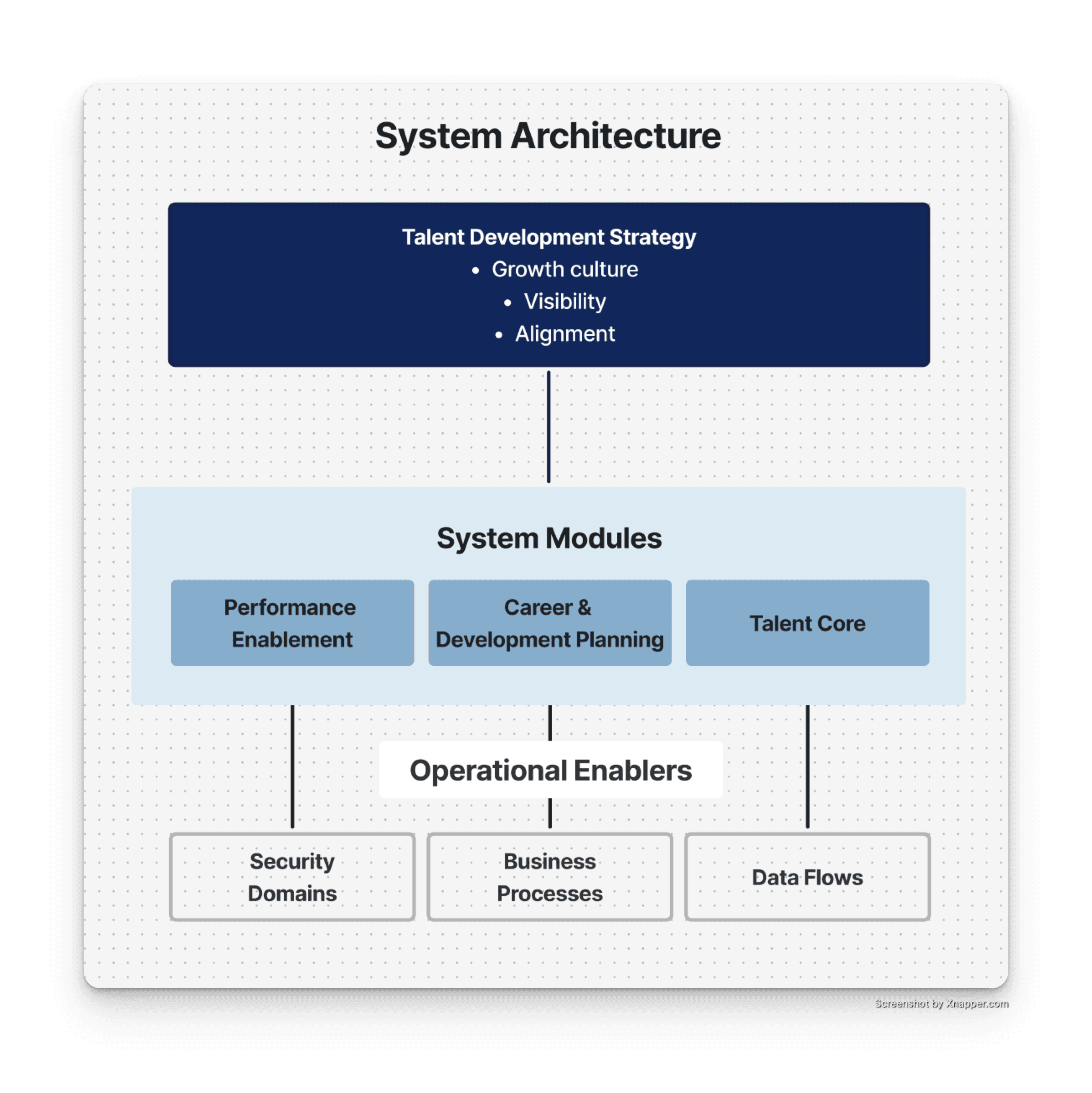
Connecting organizational strategy to Workday talent system behavior
Solution
Built interconnected experiences that encouraged participation through clarity and relevance.
- Created a unified profile combining skills, goals, and accomplishments.
- Designed feedback templates with approachable language and grouped prompts.
- Simplified workflows so tasks were clear, time-bound, and easy to complete.
- Authored rollout communications explaining why the tools mattered, not just how to use them.
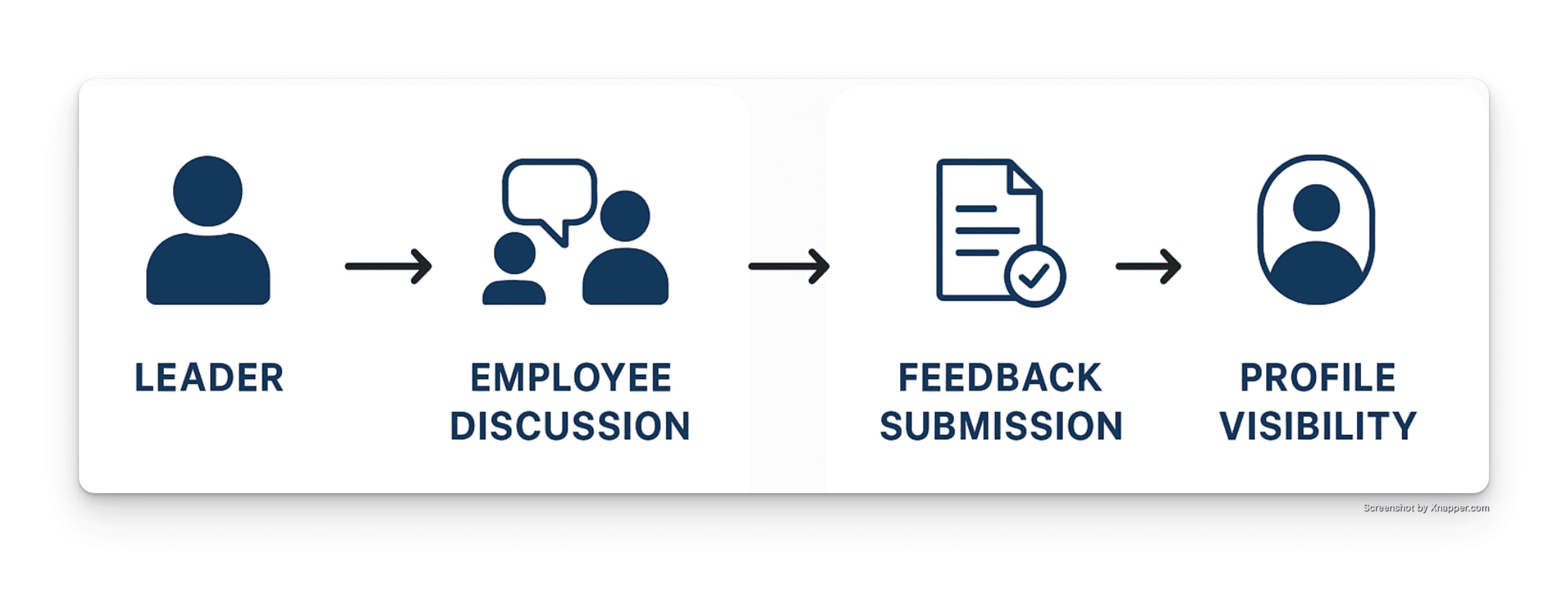
Feedback from leader discussion to employee profile visibility
Impact
Employees began engaging with their profiles proactively. Managers reported more substantive performance conversations, and HR gained insight into talent development without additional administrative load.
Reflection
Career growth systems succeed when they help people see themselves in the data. By designing for clarity, I helped transform a compliance task into a developmental dialogue.